What we built
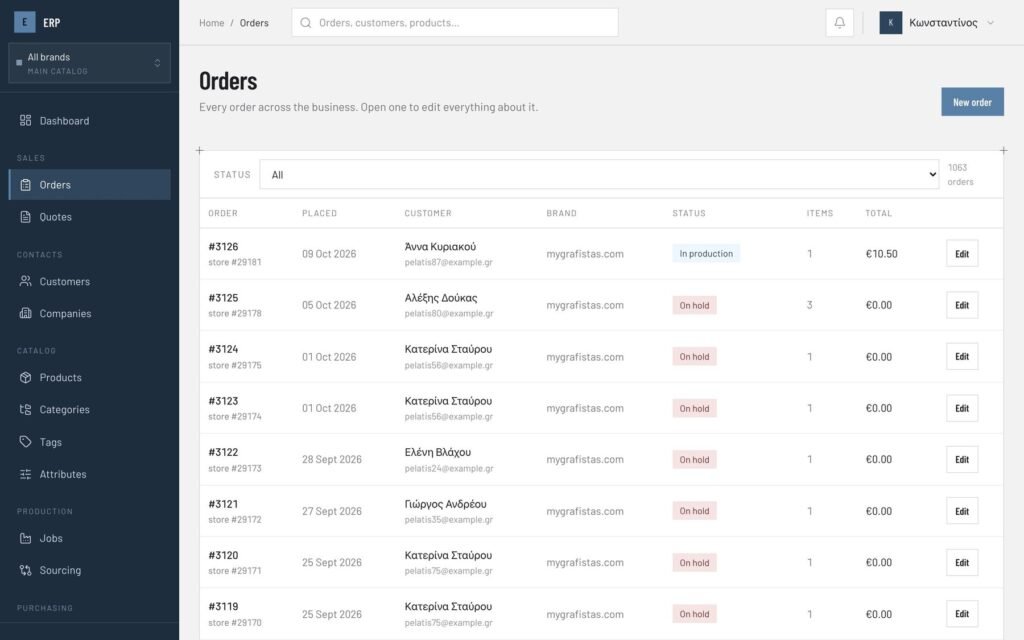
- Orders from all stores in one list
- Two-way connection with WooCommerce
- Weekly production and shopping list
- Products with variations and prices by quantity
- Customers, companies and quotes with a link
- Inventory, suppliers and user roles
- Automated tests and backups
In detail
Our own ERP is the program that joins all the work of a business with production: orders, customers, quotes, products, warehouse, suppliers and what has to be finished each day. It was built from scratch with Django and React, on the real data of Mygrafistas: over 800 products, 1,000 orders and 1,100 customers.
The business at a glance
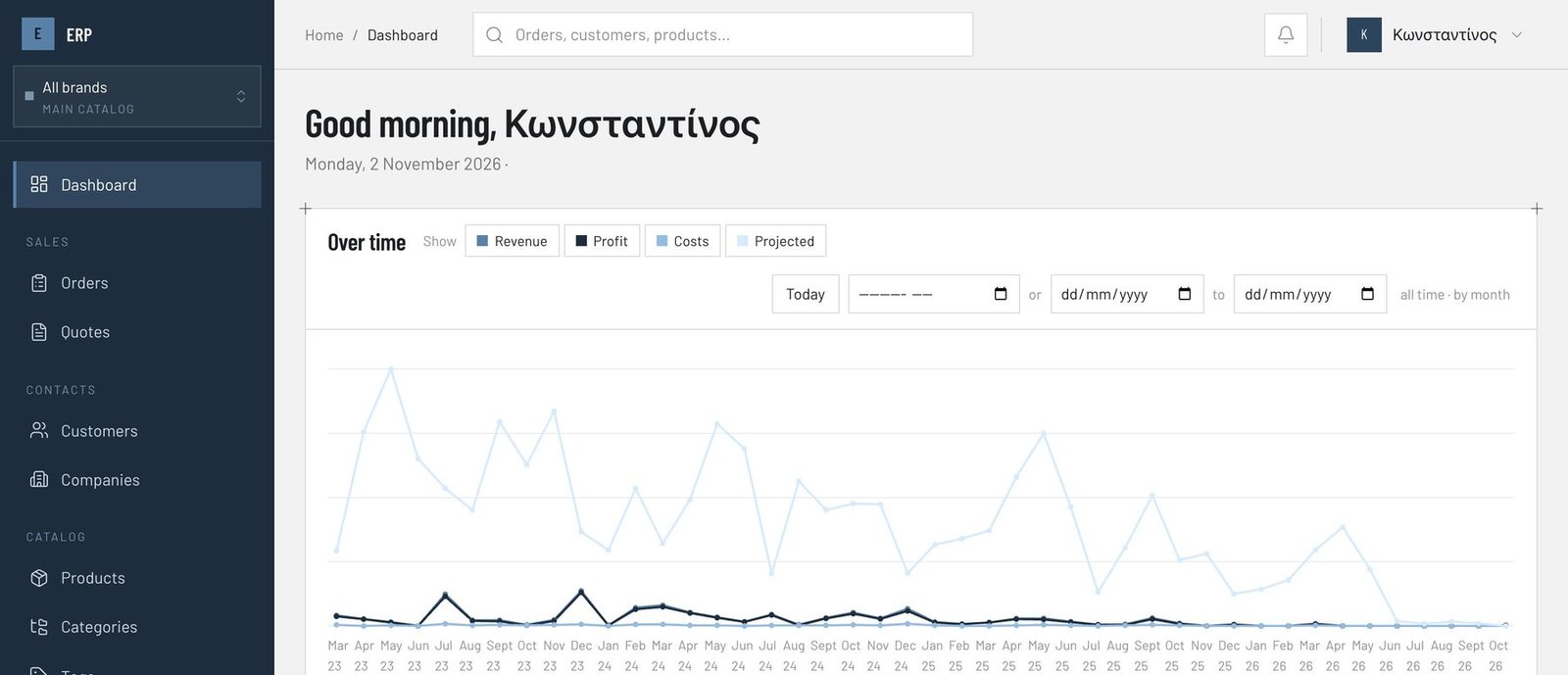
When you sign in you see revenue, profit and costs by month, for the whole business or one store, plus what is in production this week.
Automatic order import from the e-shop
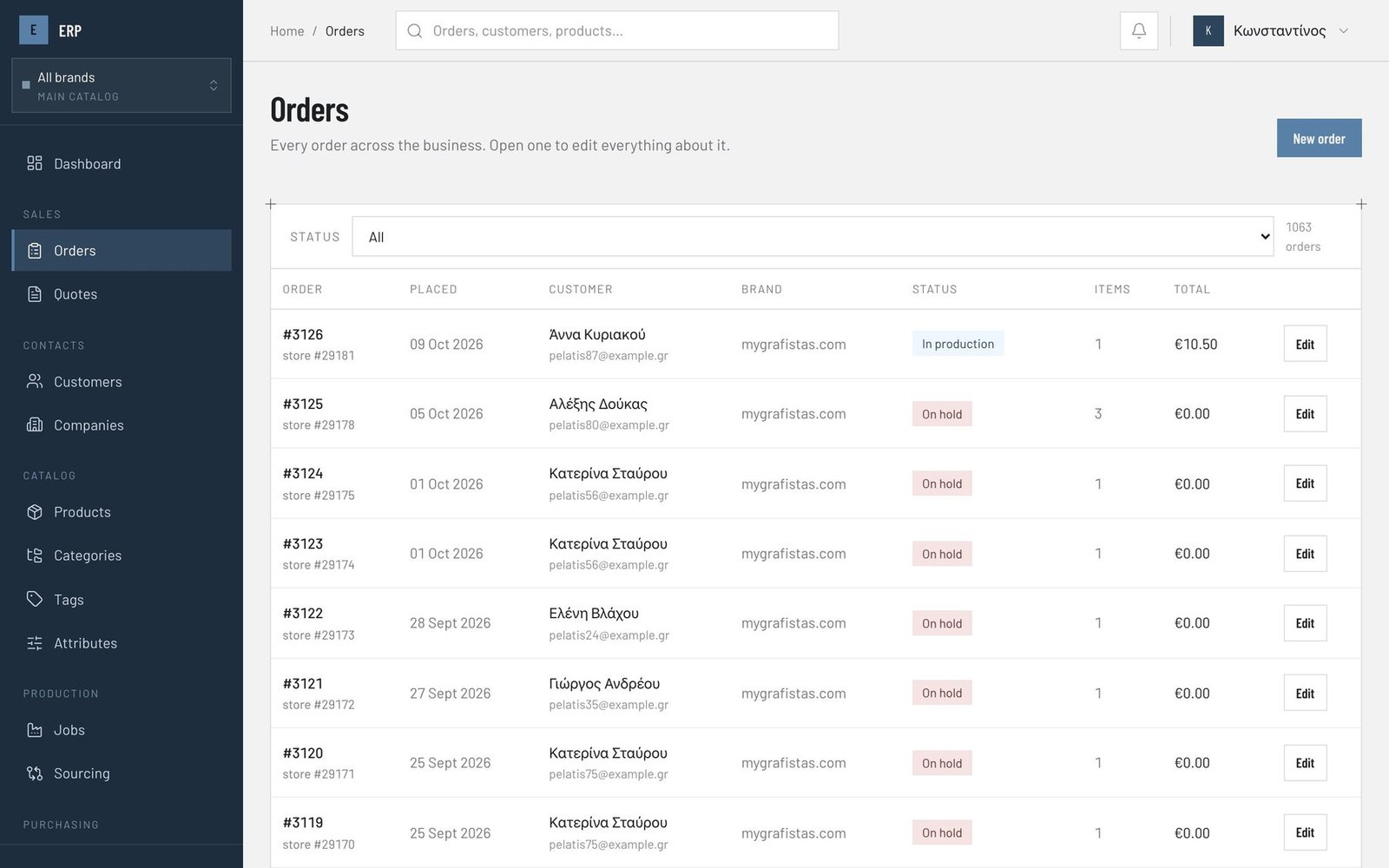
Every e-shop order lands in the ERP automatically, with its status and details. What you change in the ERP goes back to the store on the next sync, and one list shows all your stores together.
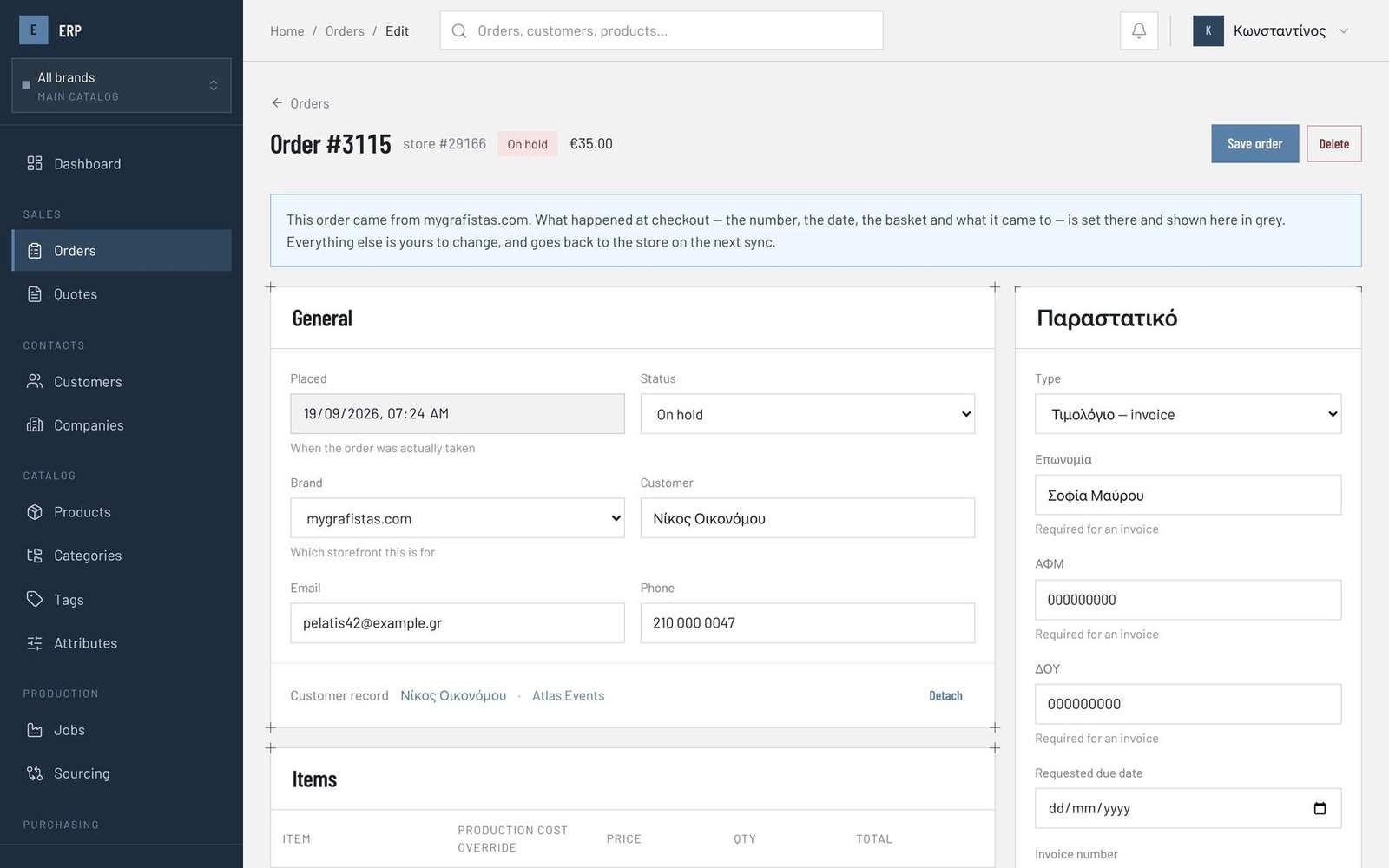
Inside an order is everything you need: customer, items, production cost, who is on it, and a receipt or invoice with company name and tax details.
Production and purchasing
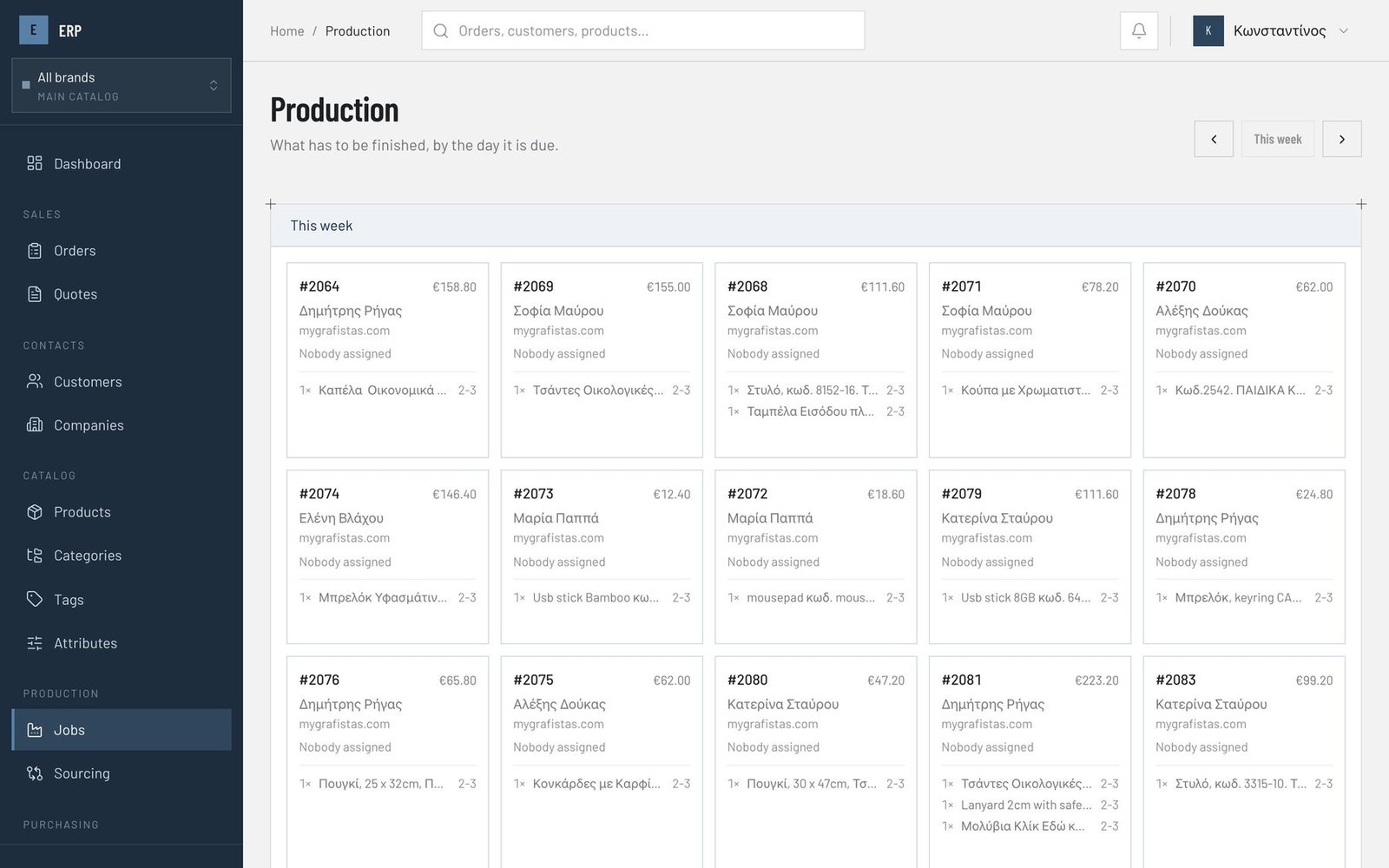
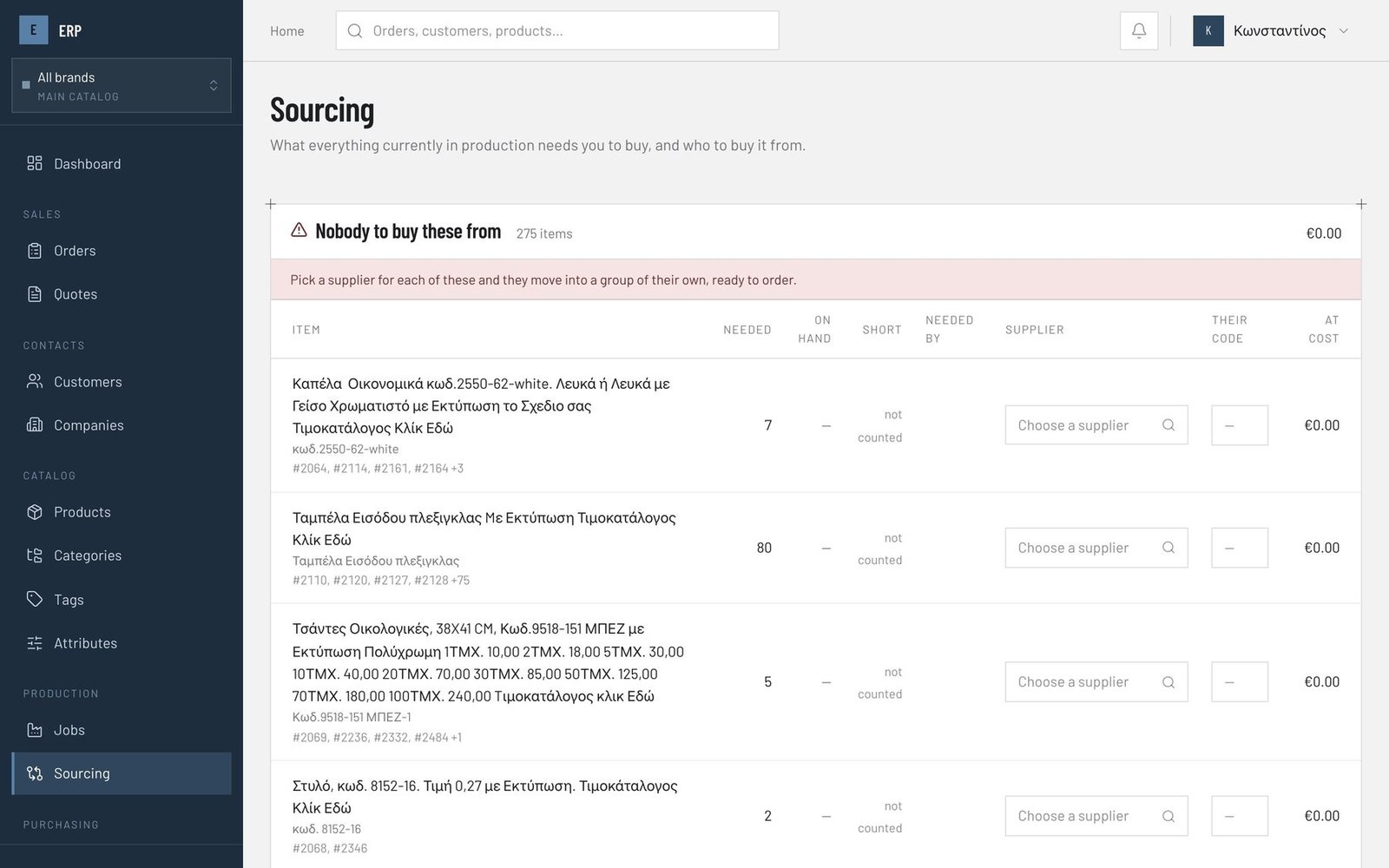
The production screen shows by week what has to be finished and who has it. From the same orders, the ERP works out what to buy, how much you already have and from which supplier, grouped so you can order in one move.
Products with your own prices
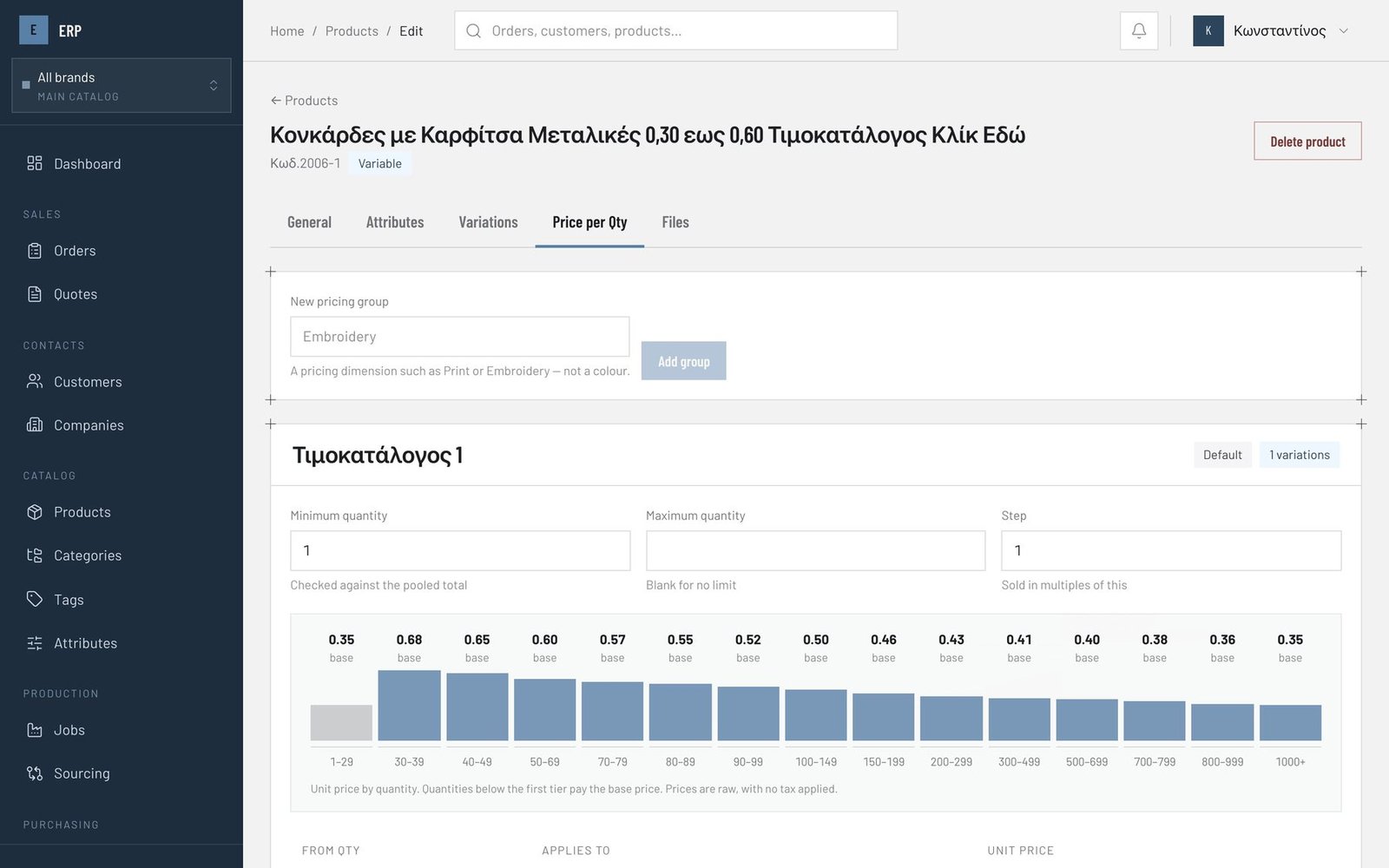
One central catalog for all your stores, with variations and tiered prices by quantity. Each store picks which products it sells and at what price.
Customers and quotes
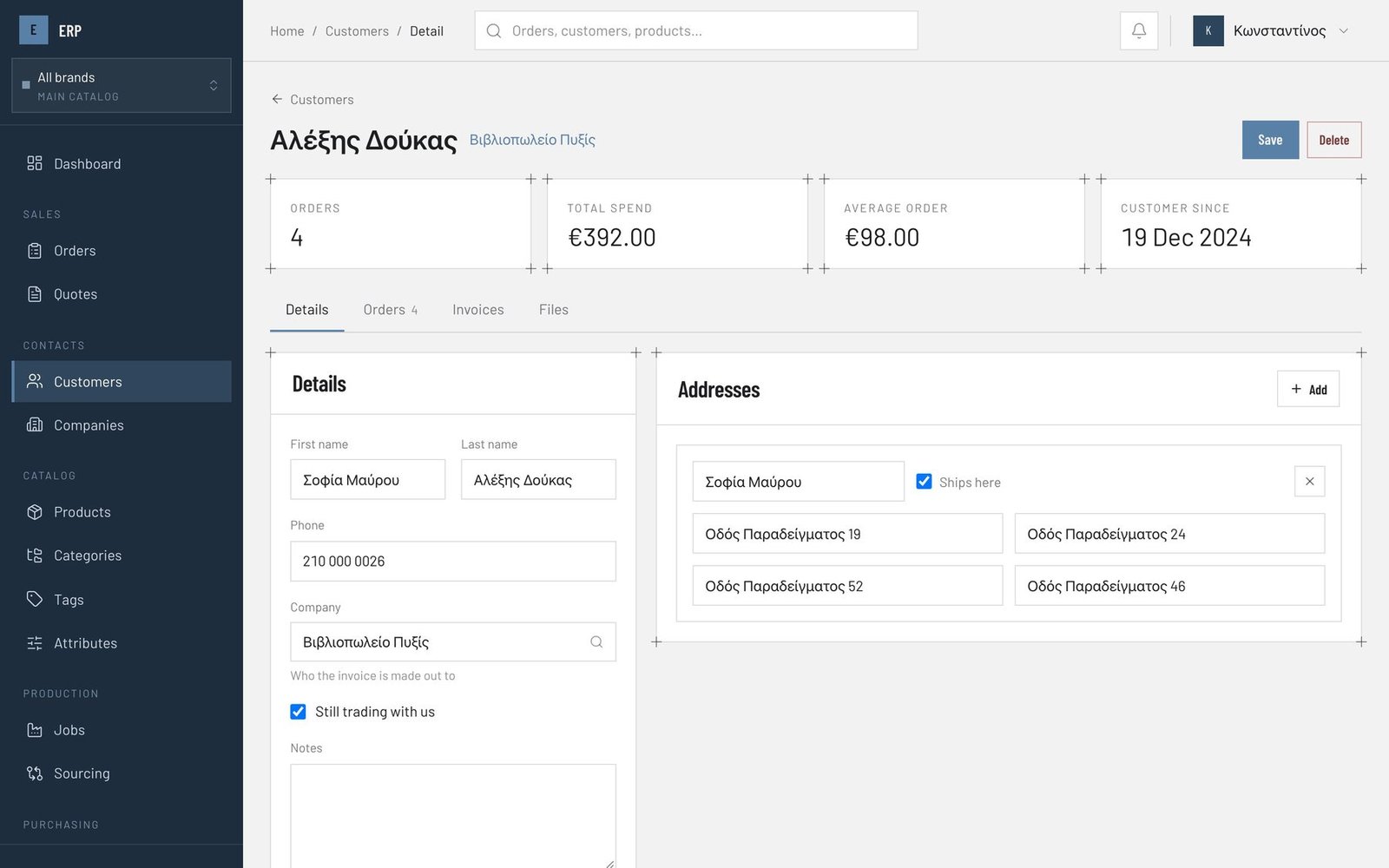
Every customer has a record with orders, invoices, files and what they keep buying. Companies hold tax details and link the people who order for them. A quote goes out as a link and, once accepted, becomes an order.
Warehouse, suppliers, roles
The warehouse separates consumables, materials and machines and shows what is running low. For suppliers you see what they charged, what you paid and what you owe. Everyone on the team signs in with their own role and sees what is theirs.
Reliability and data safety
The ERP syncs orders, prices and stock with real stores, so data safety is a core requirement.
- Background jobs are saved in the database and run on time, even after a restart.
- Every code change passes 1,304 automated tests before the system is updated.
- Off-site backups, with restore tested on a clean database.
- Immediate alerts when something fails.
- Sign-in protection, with attempt limits and optional two-step sign-in.
Tested on real data
We tested the integration on copies of two real WooCommerce stores, with about 700 linked products and 1,230 orders.
- New products, images, prices, stock, orders and order changes moved in both directions.
- Stores disconnected and reconnected with no duplicates and no changes to titles, descriptions, images, categories or prices.
- An order placed while a store was disconnected reached the ERP after it reconnected.
- Three processes writing at once, with all 180 entries kept.
- A job resumed automatically after the process running it stopped.
We set up the same system for other businesses, adapted to the way they work.
Customer details in the images are examples.
Gallery